Strategy · PRACTICAL FIELD NOTE
What Bruce Lee and your business have in common (besides a lot of people giving advice)
A candid, practical field note for small-business owners about what bruce lee and your business have in common (besides a lot of people giving advice), with a clear next step.
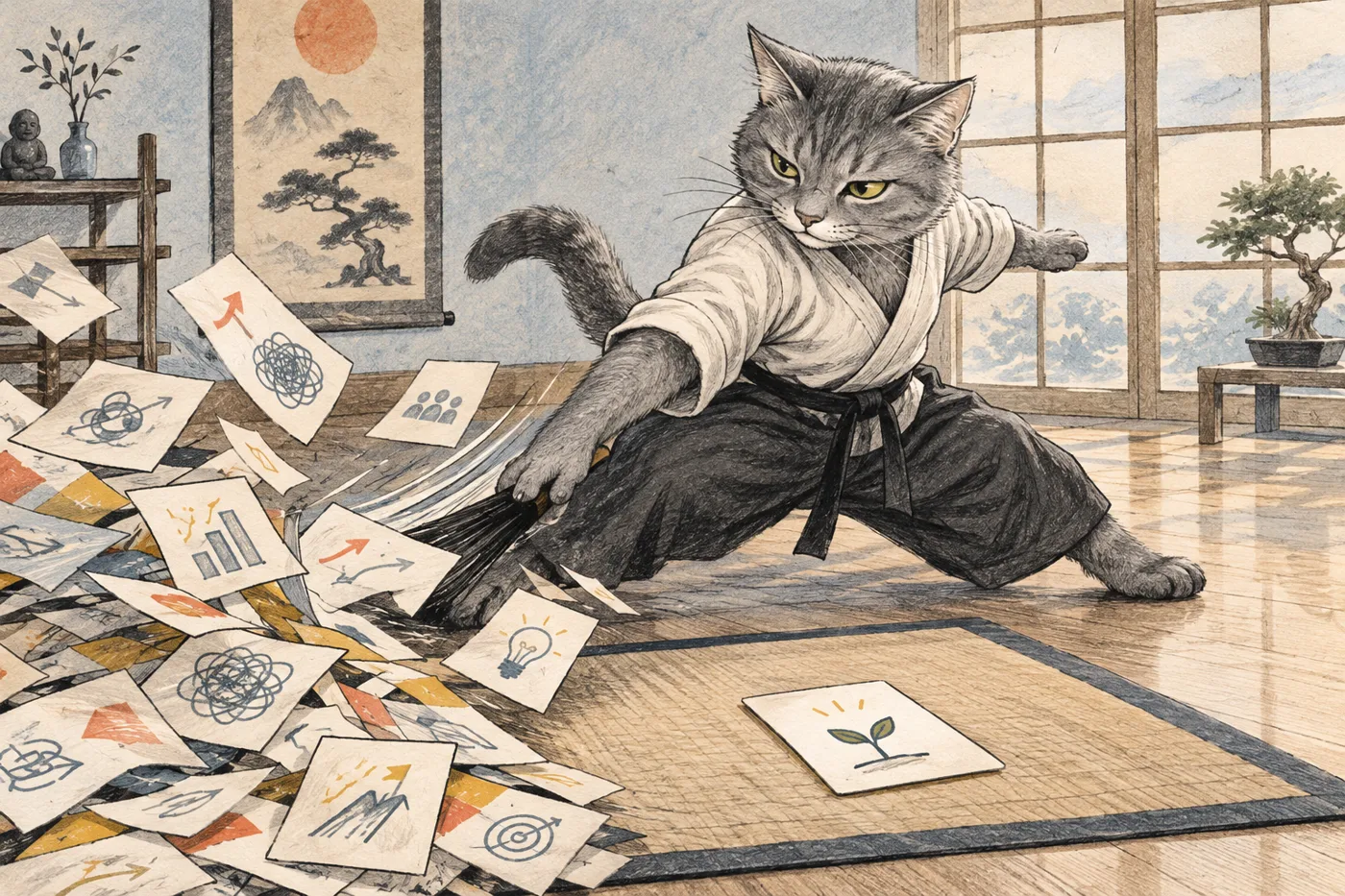
After a quiet week, a new platform, offer, or dashboard can feel like the fix. Yet the work customers already choose may need attention more than another initiative does. Bruce Lee is not a business blueprint: comparing a shop with martial arts cannot settle a cash-flow problem. The useful prompt is simpler: identify what seems to work, what is distracting you, and how you could tell the difference. For a small team with limited time and money, test one change, watch what it costs and delivers, then decide whether to keep it. No grand reinvention required.
What to know
Consider a hypothetical two-person repair shop whose owner is tempted to launch a newsletter, join a new marketplace, and redesign the website after a quiet week. Instead, the owner chooses one existing service that customers already ask about and tests a clearer offer for a month. They record inquiries, bookings, revenue, and the hours spent delivering the work, then compare those results with the previous month. If bookings rise but the extra work leaves too little margin, the offer needs adjustment, not automatic expansion. If nothing changes, the owner has learned something without committing to three new systems. The useful lesson is not to avoid new ideas. It is to make one change at a time, define what would count as improvement, and preserve the option to stop.
Put it into practice
Start with the work, not the metaphor
The Bruce Lee comparison is a prompt to examine your own business, not proof that a famous person’s approach can solve your particular problem. You do not need to move faster, add more offers, or imitate anyone. You need to identify which activities help customers and support a business you can actually run.
Write down the three things you spent the most time on last week. Beside each, note what you hoped it would change for a customer or for the business. If you cannot name a likely change, mark it as an assumption rather than a proven priority. This can help reveal where activity may be standing in for progress.
Choose one test, not a new identity
A quiet week can make a new platform or a complete rebrand feel urgent. But if you change several things at once, it may be harder to tell which change mattered, and each may add work to maintain. Start instead with a specific bottleneck: too few inquiries for a service, customers unsure what to buy, or delivery taking longer than the price allows.
Choose one change that could address that bottleneck and set a short review date. The hypothetical repair shop in the example above illustrates why the question is not simply whether the business got busier: a clearer offer could attract more bookings while also demanding more hours. The point is to test the change against the outcome that matters to you, not to adopt a new initiative on hope alone.
Before starting, decide what result would justify keeping the change and what would make you revise or stop it. That result might be more suitable inquiries, fewer questions before booking, or enough revenue to justify the hours involved. A clear threshold gives you a basis for review instead of relying only on how the experiment feels.
Measure the outcome and its cost
One attractive number can give an incomplete picture. More inquiries may include people who are not a good fit; more sales may require extra unpaid work; a fuller calendar may leave less time for work that keeps customers returning. Choose a few measures that reflect both the outcome and the effort or money needed to deliver it.
If bookings rise while delivery hours rise even more, that is neither an automatic success nor a failure. It could mean the offer attracted demand but needs a different price, scope, or process. If bookings do not change, first consider whether customers actually saw the revised offer. Record what happened plainly, including what remains uncertain.
Keep the test small enough to reverse. Avoid a long commitment or rebuilding essential systems just to find out whether a change works. And where a test touches safety, legal obligations, or a promise customers rely on, those are not optional parts of the experiment: preserve what must remain dependable and test only the discretionary element.
Decide at the review date
At the end, choose whether to keep the change, adjust one part and test again, or stop. Keep it if the agreed outcome improved and the added effort remains workable. Adjust it if the result suggests a fixable weakness, such as unclear wording or an overly broad service. Stop if it misses your threshold, costs too much, or takes time from a more important priority.
It can be tempting to extend a test indefinitely because stopping feels like admitting failure. But a bounded test that rules out a poor fit can still help you decide where not to spend more time or money. The opposite mistake is treating one unusual customer or busy day as proof that an idea is ready to scale. Treat an isolated result as a reason to look closer.
You do not need to reject every new idea. Give one promising idea a limited test while protecting the work that already serves customers. Pick a bottleneck, set a result and a review point, then decide what to do next based on what happened.